Q: How badly does Romania need to raise taxes?
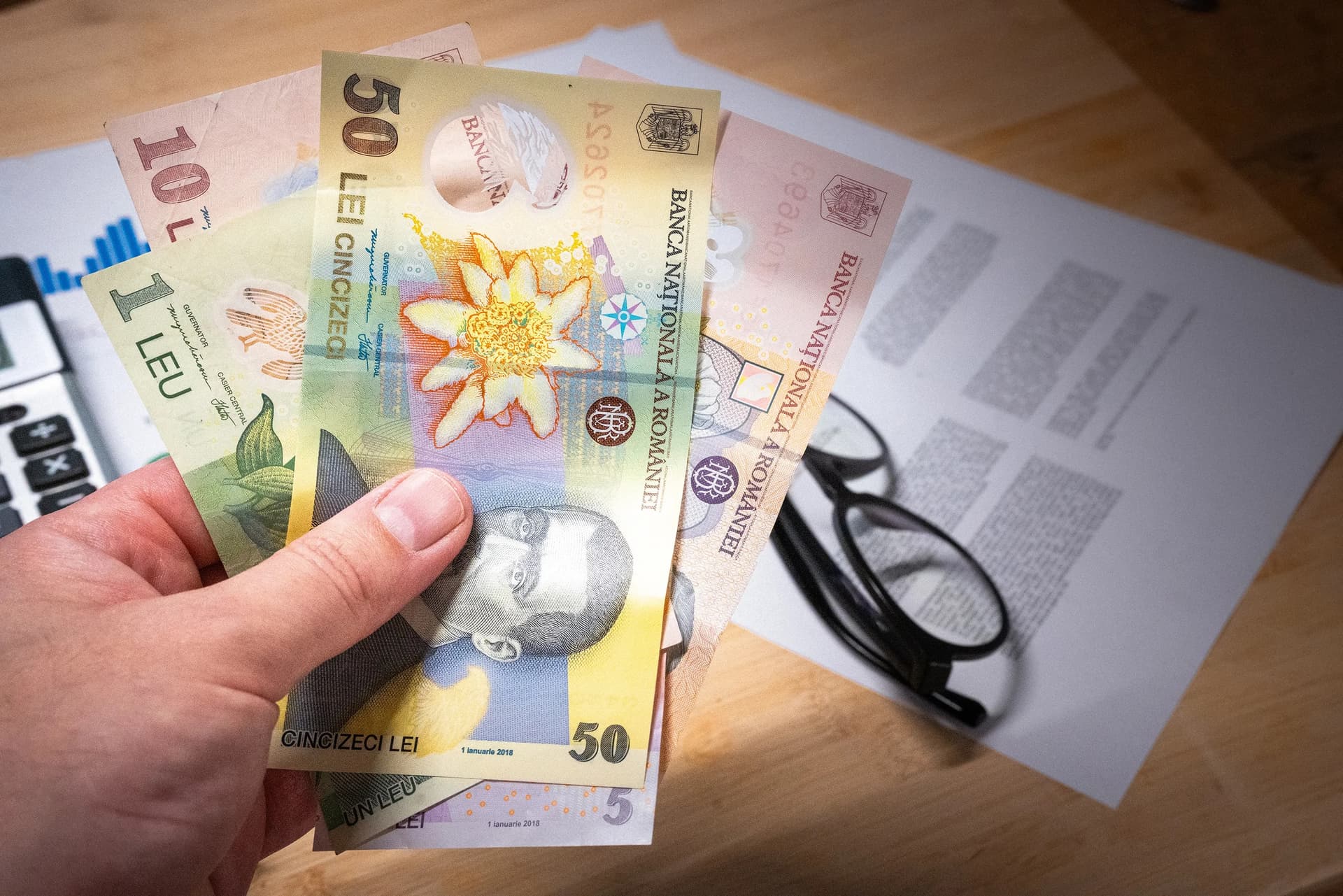
The Romanian government certainly has got to face the issue of whether or not to raise taxes sooner rather than later. The government in Romania has to make a decision on taxes and raising the rates quickly. Ideally, the new rates would be in place effective as of 1 January 2010. The issue is with the consumption tax, such as the value-added tax, and quite often governments in other countries make an increase in value-added tax effective from midnight at the day of the announcement. So there is a possibility this would apply. I would expect taxes on profits and on personal income, if they are increased, to be applicable from next year, but VAT could be either way. It could be effective immediately or be delayed until January 2010.
Q: When do you think such a measure should be announced, to be applicable as of 2010?
I would certainly prefer an early announcement, because there is one thing that investors have been asking the government to do, since I’ve been in Romania, and that’s to have a stable system where there are no overnight surprises. So, in an ideal world, it’s a long time between the announcement and the implementation, as long as possible. But I think that, if the introduction of an increased rate of tax was issued in a short period, the country and industry and commerce might not agree with this, but I believe they would understand the need because there is no doubt that Romania is going through very difficult times, and something needs to be done.
Q: Some say that an increase in the flat tax would make many companies no longer pay taxes, considering that the black economy already makes up one third of gross domestic product.
I do not think that the rates of tax and the levels of tax per se materially affect the size of the black economy. I think that those individuals and companies who are in the black economy and do not pay tax are individuals and companies who would not pay tax under any circumstances, even if the tax rate was one percent. There is no statistical proof according to which a two-three percentage point increase or cut would affect a rise in the collection base. There would certainly be an effect in extreme cases, if the tax cut were significant, for example from 80-90 percent. The solution for raising budget revenues is raising the efficiency and simplifying the tax collection system.
Q: The minimum tax has already affected many small enterprises to close their businesses. How useful is this tax?
Many of the enterprises that closed their doors because of the minimum tax were lacking activity anyway. Others, which had activity but registered losses, had to suffer, and for them the minimum tax is not fair. If you make a profit, you pay a tax, if you have losses, you don’t.
Q: To what extent does the increase in taxes affect the decision of foreign investors to come to Romania?
There is no clear proof that low taxes are an incentive for investments. Investors would rather want to make sure that they can fulfil their business plan and that they can find the necessary workforce when they decide to make an investment.
Q: What measures are necessary for the economy to emerge from this recession?
The recession in Western Europe was caused by the irresponsibility of banks, to a great extent, investing in toxic assets and all the rest of it, which created a potential meltdown in the banking system, and meant government intervention on a massive scale. Now, the banking system in Romania was not irresponsible. The weakness is that a number of the banks in Romania are foreign-owned. Those banks themselves have problems, and obviously it’s very difficult for them to release funds into their Romanian banks, which can then be released for industry. Fundamentally, the Romanian recession is not due to irresponsible behaviour by banks in Romania. Romania is being affected by the recession in Europe. Now, to get out of it, there have to be immediate steps to get cash moving. It’s quite interesting that an undertaking was given to the British Romanian Chamber by the Ministry of Finance that the government would pay all its bills within 45 days, including repayment of VAT. The government has to be responsible that this applies. I think the government also needs to send a clear message to the banks, and the banks need to provide support for industry and not just for what we call the golden chip clients who got security. They need to be lending money to companies which are responsible, but are in desperate need for cash. So these are the immediate survival measures.
Q: Is Romania still interesting for foreign investors at present?
Romania has got the same things to offer now that it had last year, when there was growth of seven percent. 2008 was, I think, the fourth year, when there was continuous growth of seven percent. Its advantages are: a skilled workforce, a workforce in the skills sector which is very comfortable with foreign languages, which is very important to the investors. Romania has natural resources, oil and gas. Romania has the second-largest domestic market of all the countries that joined the European Union in 2004 and 2007. Romania is second only to Poland, and is twice as large as the third country. So, there is the market, there is the desire both at the individual level but also at the industrial and commercial levels to seek growth. There is the opportunity for Romania to obtain EU funding, which will bring an undoubted boost of the economy, which will bring investors in. A major construction company specializing in highways hasn’t got much to get in Western Europe, but has a great deal potentially to benefit from coming to Romania. Romania has all the attractions now that it had last year, before the crisis really began to emerge. All companies want to invest and want to grow. The problem is that at the moment, survival is key. Companies need to know that they could survive, so companies are restructuring to make sure they can get through the crisis. Now, this process started early in Western Europe, because the crisis hit Western Europe a year before Romania. That does not mean that investment programs are put on hold. And I’m seeing, both through the Chamber and also through KPMG, a significant number of foreign companies proposing to invest in Romania right now.
Q: In what fields?
In no order of priority, oil camps, specialist services, engineering services, advisory services. There is interest in manufacturing, although obviously the automotive industry and manufacturing associated with that has been hit. Generally, it’s in all sectors, with the obvious exception of two: one is real estate and the other is automotive. But even then, looking at the automotive industry, Ford has made a big commitment in Craiova. And obviously it was very difficult for Ford. But Ford is not pulling out.
Q: They committed to this investment before the crisis. If things had happened now maybe they would not have come.
I think the factors which lead to a company opening up a production plant are there whether or not Romania is in recession. The recession may affect timing, but I think timing is largely beyond Romania’s control. In the last few months, significant sized companies, and we’re talking about 5,000-10,000 employees plus, have come to Romania with significant investment plans. There’s also a sizable market with large SMEs [small and medium-sized companies], and I put that at anything up to 5,000. The small SMEs, which I would classify as anything under 500, they come too. But there does not seem to be any particular pattern in the size of companies that are coming, it’s simply whether or not they think there is space on the market.
Do you think this ongoing political crisis will have an impact on the business environment?
If you talk to investors, and you look at what they’ve done in the last 10-15 years, if you look at projected behaviour, if you look at survey of investors investing in other countries, it is quite unusual for investors to say that frequent changes of government mean that they will not invest in the country. And I’ve talked to investors at length. They might find frequent changes of government frustrating, but it’s very, very rare that a company will say that the perception of political instability means they won’t come.